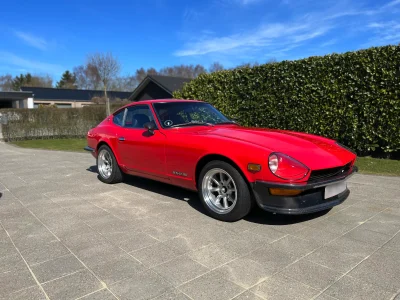
Datsun is one of the most fascinating names in automotive history. For decades, it was the primary brand name used by Nissan for its vehicles exported outside of Japan.
If you are looking at classic cars, tuning culture, or automotive lore, the name Datsun usually brings to mind a few legendary machines.
The Legends That Defined the Brand
The Datsun 240Z (The Fairlady Z)
Introduced in 1969, the 240Z completely changed how the world viewed Japanese cars. Before the Z, Japanese imports were mostly seen as purely economical and uninspired. The 240Z offered the stunning fastback looks of a European sports car and a smooth inline-6 engine, but at a fraction of the price of a Porsche or Jaguar. It became an instant icon and birthed the legendary Nissan “Z” sports car lineage that continues today.
The Datsun 510
Often called the “Poor Man’s BMW,” the 510 (released in 1968) was an unassuming sedan, wagon, or coupe that hid a secret: it featured an advanced independent rear suspension and a highly tunable engine. It became a powerhouse in SCCA amateur racing and remains a holy grail for vintage stance and resto-mod car builders.
A Quick History Lesson
- Where did the name come from? In 1914, the company built a car called the DAT, named after the initials of the three investors (Den, Aoyama, and Takeuchi). Later, they built a smaller car and named it the “Son of DAT.” They eventually changed “Son” to “Sun” because son means “loss” in Japanese. Thus: Dat-sun.
- The Disappearance (1981–1986): In the early 1980s, Nissan decided to phase out the Datsun name globally to unify everything under the “Nissan” corporate banner. It was a massive, expensive marketing pivot that confused many buyers at the time, as Datsun actually had higher brand recognition than Nissan in the United States.
- The Short-Lived Revival (2013–2022): Nissan actually brought the Datsun brand back as a low-cost, budget-friendly brand for emerging markets like India, Indonesia, and Russia. However, it didn’t capture the magic of the original run, and Nissan officially discontinued the nameplate again in 2022 to focus on electric vehicles and core models.