Mechanical Immortality: Inside Bugatti’s New Era
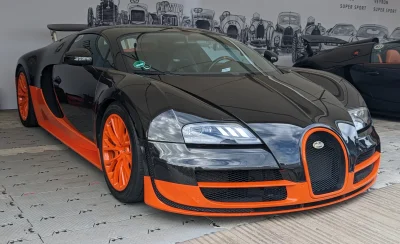
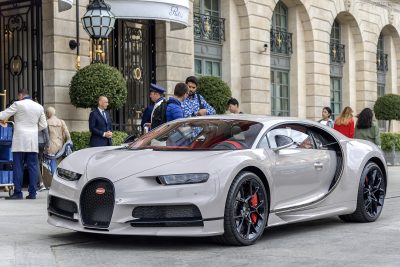
For the last twenty years, Bugatti has been defined by one monstrous, engineering-defying masterpiece: the quad-turbocharged W16 engine. It was the heart that pushed the Veyron past the 250 mph barrier and allowed the Chiron to rewrite the laws of modern physics.
But as the final Chiron derivatives leave the factory gates in Molsheim, France, the hypercar elite wondered: How do you follow an absolute legend?
Under the fresh leadership of EV pioneer Mate Rimac, Bugatti just gave us its answer. Enter the Bugatti Tourbillon—a car that rejects modern digital trends to embrace pure, mechanical artistry.
1. The Name: Horology Meets Hypercars
Every modern Bugatti has been named after a historic racing driver (Veyron, Chiron, Divo). The new car breaks that tradition entirely.
A tourbillon is a highly complex mechanism used by Swiss watchmakers to counter the effects of gravity and maximize accuracy. By using this name, Bugatti is sending a clear message: this car isn’t a disposable piece of modern tech. It is designed to be a timeless piece of mechanical art pour l’éternité (for eternity).
2. The Engine: A Screaming, Naturally Aspirated V16
While the rest of the automotive world is downsizing to smaller engines with massive turbochargers, Bugatti did the exact opposite.
They threw out the old W16 and built a completely clean-sheet, 8.3-liter naturally aspirated V16 engine from scratch with the help of Cosworth.
Without turbos muffling the sound, this internal combustion masterpiece revs all the way to a screaming 9,000 RPM, pushing out 1,000 horsepower purely on petrol.
To bridge the gap, Bugatti paired the V16 with three electric motors powered by an 800-volt battery pack. The electric motors add an extra 800 hp, bringing the combined total to a staggering 1,800 horsepower.
| Performance Metric | Bugatti Tourbillon |
| 0–62 mph (100 km/h) | 2.0 seconds |
| 0–124 mph (200 km/h) | Less than 5.0 seconds |
| 0–248 mph (400 km/h) | Less than 25.0 seconds |
| Top Speed (With Speed Key) | 276 mph (445 km/h) |
3. The Interior: An Analog Masterpiece
Step inside the Tourbillon, and you won’t find a single digital screen cluttering the dashboard. Bugatti deliberately avoided the giant iPad-style displays common in modern cars, knowing they will look horribly dated in ten or twenty years.
Instead, the focal point is an incredible instrument cluster built in collaboration with authentic Swiss watchmakers.
The Floating Gauges: The cluster is made from titanium, sapphire glass, and real rubies. It weighs just 700 grams, yet features intricate, visible moving gears. Even wilder? The steering wheel utilizes a fixed-hub design. When you turn the wheel, the outer rim rotates while the inner hub and the beautiful watchmaker gauges stay perfectly level, ensuring they are never blocked from your sight.
A tiny high-definition screen is hidden inside the dash, but it only deploys and flips out if you explicitly request it for a backup camera or Apple CarPlay. Otherwise, the cabin remains entirely, beautifully analog.
The Verdict: A Masterclass in Timelessness
With a price tag starting around $4.6 million and limited to just 250 units globally, the Tourbillon is an extraordinarily rare breed.
By marrying a high-revving, old-school V16 engine with high-tech electric motors and a jewel-like analog interior, Bugatti hasn’t just built a faster successor to the Chiron. They have created a physical manifestation of automotive haute couture—a mechanical sculpture designed to be as jaw-dropping a century from now as it is today.